
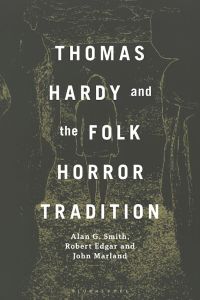
Thomas Hardy and the Folk Horror Tradition takes the uncanny and unsettling fiction of Thomas Hardy as fundamental in examining the lineage of ‘Hardyan Folk Horror’. Hardy’s novels and his short fiction often delve into a world of folklore and what was, for Hardy the recent past. Hardy’s Wessex plays out tensions between the rational and irrational, the pagan and the Christian, the past and the ‘enlightened’ future. Examining these tensions in Hardy’s life and his work provides a foundation for exploring the themes that develop in the latter half of the 20th century and again in the 21st century into a definable genre, folk horror.
This study analyses the subduing function of heritage drama via analysis of adaptations of Hardy’s work to this financially lucrative film market. This is a market in which the inclusion of the weird and the eerie does not fit with the construction of a past and its function in creating a nostalgia of a safe and idyllic picture of England’s rural past. However, there are some lesser-known adaptations from the 1970s that sit alongside the unholy trinity of folk horror: the adaptation for television of the Wessex Tales. From a consideration of the epistemological fissure that characterize Hardy’s world, the book draws parallels between then and now and the manifestation of writing on conceptual borders. Through this comparative analysis, Thomas Hardy and the Folk Horror Tradition posits that we currently exist on a moment of fracture, when tradition sits as a seductive threat.
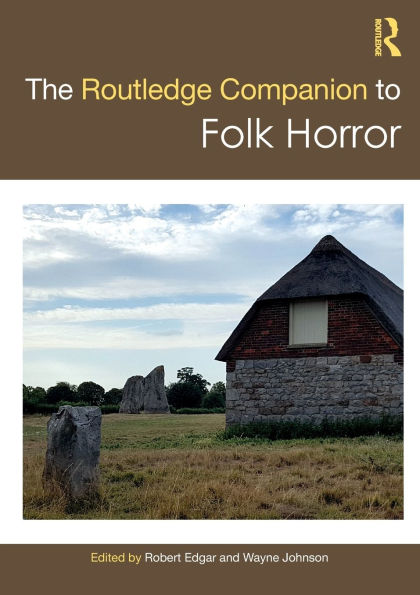
The Routledge Companion to Folk Horror offers a comprehensive guide to this popular genre. It explores its origins, canonical texts and thinkers, the crucial underlying themes of nostalgia and hauntology, and identifies new trends in the field.
Divided into five parts, the first focuses on the history of Folk Horror from medieval texts to the present day. It considers the first wave of contemporary Folk Horror through the films of the ‘unholy trinity’, as well as discussing the influence of ancient gods and early Folk Horror. Part 2 looks at the spaces, landscapes, and cultural relics, which form a central focus for Folk Horror. In Part 3, the contributors examine the rich history of the use of folklore in children’s fiction. The next part discusses recent examples of Folk Horror-infused music and image. Chapters consider the relationship between different genres of music to Folk Horror (such as folk music, black metal, and new wave), sound and performance, comic books, and the Dark Web. Often regarded as British in origin, the final part analyses texts which break this link, as the contributors reveal the larger realms of regional, national, international, and transnational Folk Horror.
Featuring 40 contributions, this authoritative collection brings together leading voices in the field. It is an invaluable resource for students and scholars interested in this vibrant genre and its enduring influence on literature, film, music, and culture.
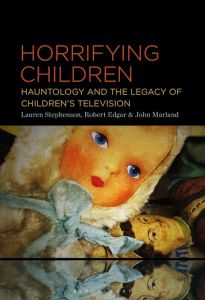
Horrifying Children examines weird and eerie children’s television and literature via critical analysis, memoir and autoethnography.
There has been an explosion of interest in the impact of children’s television and literature of the late twentieth century. In particular, the 1970s, ’80s and ’90s are seen as decades that shaped a great deal of the contemporary cultural landscape. Television of this period dominated the world of childhood entertainment, drawing freely upon literature and popular culture, like the Garbage Pail Kids and Stranger Things, and much of it continues to resonate powerfully with the generation of cultural producers (fiction writers, screenwriters, directors, musicians and artists) that grew up watching the weird, the eerie and the horrific: the essence of 21st-century Hauntology. In these terms this book is not about children’s television as it exists now, but rather as it features as a facet of memory in the 21st century.
As such it is the legacy of these television programmes that is at the core of Horrifying Children. The ‘haunting’ of adults by what we have seen on the screen is crucial to the study. This collection directly addresses that which ‘scared us’ in the past insomuch as there is a correlation between individual and collective cultural memory, with some chapters providing an opportunity for situating existing explorations and understandings of Gothic and Horror TV within a hauntological and experiential framework.
 Robert Edgar