
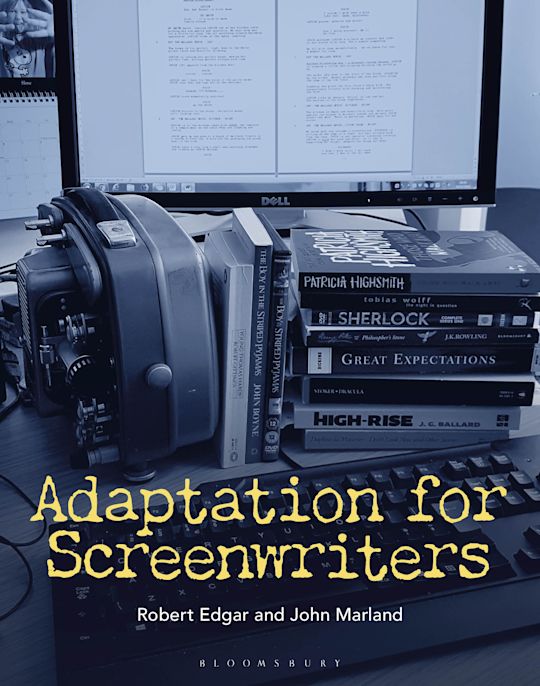
Adaptation for Screenwriters. Develop the critical and creative skills to ‘translate’ a story from page to screen with this step-by-step guide to the process of screen adaptation you’ll learn to:
– interrogate a novel or short story to release its ‘inner film’
– convert fictional prose into visual drama
– overcome the obstacles presented by different media ‘languages’
– approach key strategic decisions – both technical and interpretive
– draft and re-draft your plot, characters and dialogue
– professionally format and submit your finished script
In addition to examples taken from ‘literary classics’, contemporary novels, genre fiction, short stories, and biographical material, Marland and Edgar embrace the wider phenomenon of re-telling and updating existing stories, such as the ‘appropriation’ of popular figures, inter-film adaptation (sequels and ‘reboots’), and development into other visual forms including graphic fiction and video games.
Whether you are producing a faithful adaptation of Tolstoy’s War and Peace, or planning to pair up the crime-fighting duo of Sherlock Holmes and Batman, Adaptation for Screenwriters will be your guide.
The Language of Film (second edition). An effective filmmaker needs to have a good understanding of how film language works, and more importantly, how to actively influence an audience’s thoughts and feelings and guide their gaze around the screen.
Packed with examples from classic and contemporary cinema, The Language of Film reveals the essential building blocks of film and explains how the screen communicates meaning to its audience. You will learn about fundamental theories and concepts, including film semiotics, narrative structures, ideology, and genre, as well as how elements such as shot size, camera movement, editing technique, and color come together to create the cinematic image.
With insightful case studies and discussion questions, dozens of practical tips and exercises, and a new chapter on film sound, this new edition of The Language of Film is a must-have guide for aspiring filmmakers.
Basics Film-Making: Directing Fiction introduces the essential aspects of the directorial process, focusing on the requirements of short films while also drawing on classic examples from the world of feature films. It looks at the tricky balancing act of art and business, offering guidelines and basic principles rather than instructions.
Divided into the three key stages of the film-making process – pre-production, production and postproduction, the book provides students with a framework to begin directing their own productions. The chapters are interspersed with case studies investigating the working practices of leading professionals such as Robert Rodriguez, and Mike Leigh.

Basics Film-Making: Screenwriting is the second in the Basics Film-Making series and is aimed both at students on film production courses, as well as those wishing to write a short film. The book teaches the key elements of screenwriting through examining areas such as dialogue, sound, setting, shots and structure. It also provides advice to new film-makers on how to market their productions. This is an essential guide to screenwriting and will teach you to write and produce artistically satisfying shorts.
 Robert Edgar